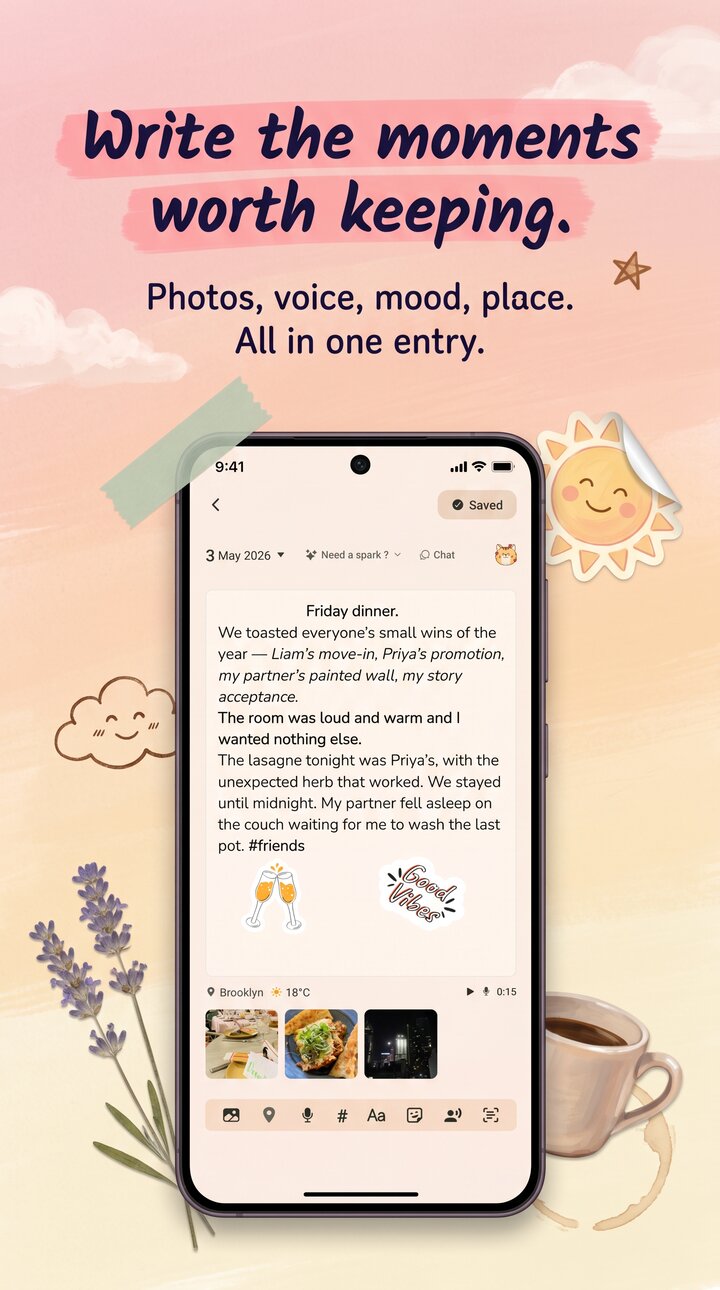
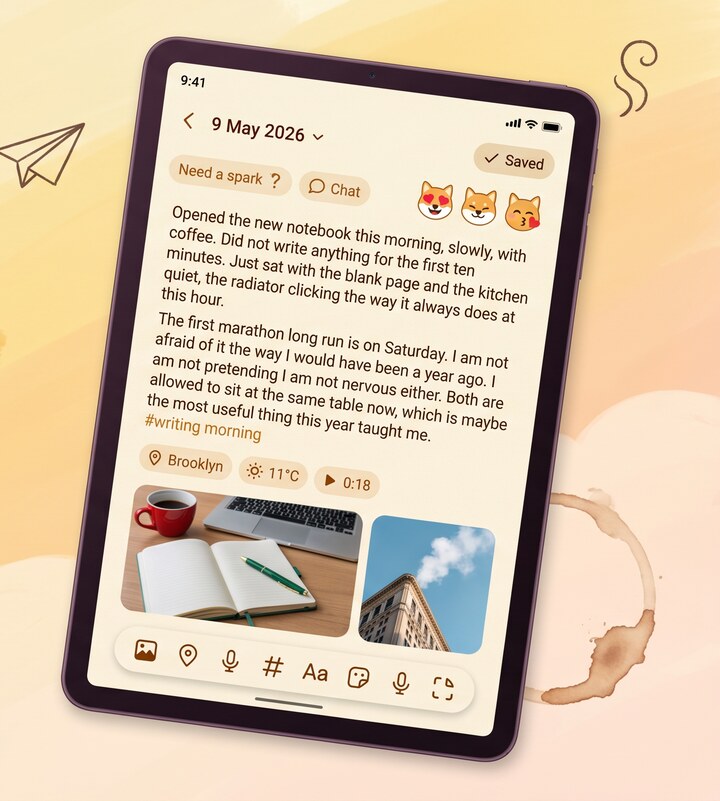
Why voice journaling sticks.
Most people quit a written journal in the first month. Not because they stop caring — because typing is friction. You sit down, open the app, hold your phone, and try to thumb-out a paragraph while the thought you wanted to write is already drifting. By the time you've typed three sentences you've lost half of what you meant.
Voice journaling fixes the friction. You can record on a walk, in the car (Reflect runs in the background while you drive), in bed before sleep, while doing dishes. The thought goes from your head to the journal in one motion, no thumbs involved. People who couldn't keep a written diary going often discover that 5 minutes of talking a day is easy.
And the transcripts are honest in a way typing isn't. You speak the way you actually think — looser, more associative, less edited. A voice transcript from a hard morning reads like a hard morning. A typed entry from the same morning is usually three tidy sentences that miss the point.
The trade-offs you should know.
Audio transcription isn't free — it costs us a per-minute fee from Google. We give you a generous free allowance every month, and premium covers heavy use. If you record an hour a day, you'll want premium. If you do 5 minutes a few times a week, the free tier is plenty.
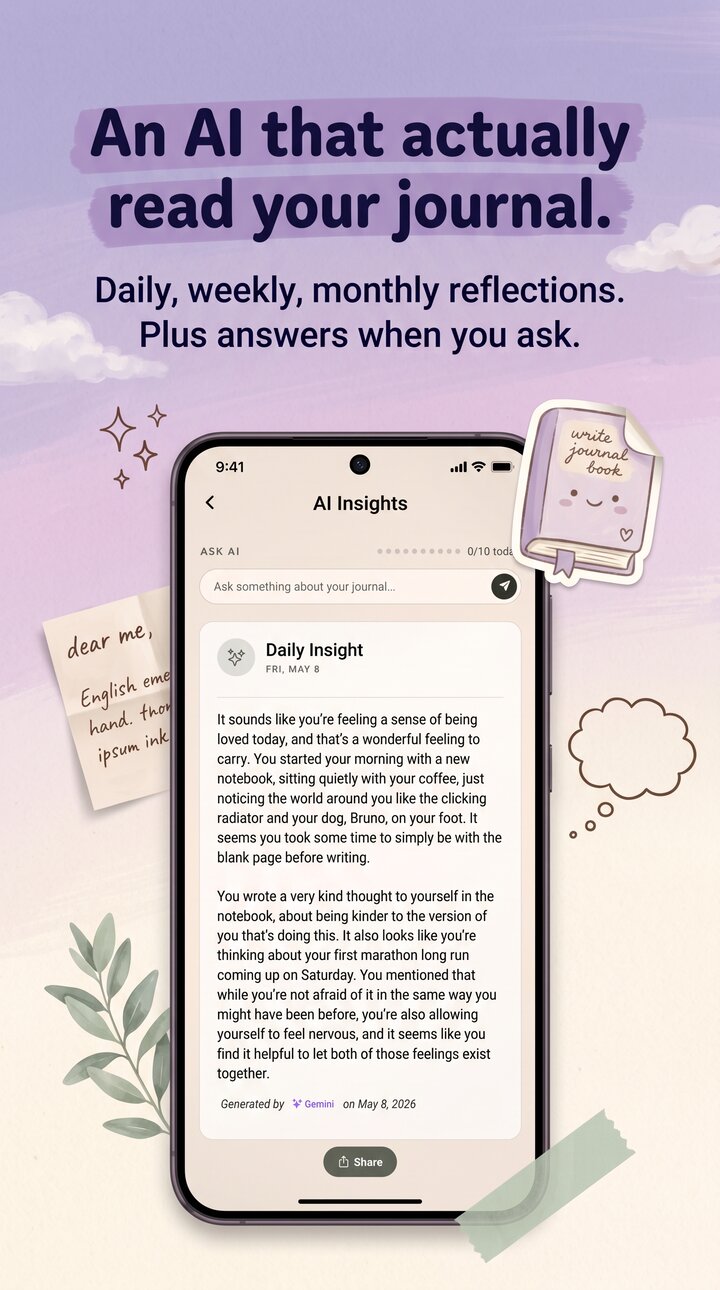
And the privacy story is honest. Typed text gets PII-stripped on-device before it touches Gemini for insights. Audio can't be stripped that way — we can't redact your sister's name from a recording. The raw audio leaves your phone briefly to be transcribed, returns as text, and gets encrypted with your entry. Gemini doesn't keep the audio or train on it. But if you're talking about something you genuinely don't want a third party to ever process, type it instead of saying it.